Autumn Pleasures


The Simple Pleasures of Autumn
What is it about autumn that makes it so special?
For me, it's the beautiful colours, the crisp air and that soft, golden light that makes everything feel a little more magical.
And I must admit, I rather enjoy the darker evenings too. Suddenly, the dust, the dirty windows and the slightly chaotic veranda disappear into the shadows. Nobody notices what a terrible housewife I really am!
Instead, there are candles on the table, a glass of red wine within reach, a warm blanket wrapped around my legs and a good thriller on television. My idea of a perfect autumn evening. Just what I need to recharge my batteries.
Don't get me wrong, I love those long, bright summer days. Who doesn't? But there is something wonderfully comforting about this time of year. That feeling we Norwegians call hygge.
As a photographer, however, autumn and winter bring their own challenges. I prefer working with natural light, and suddenly there is so much less of it. The days grow shorter, and I have to plan my photography around those precious hours of daylight.
I'm still learning, and perhaps that's what I love most about photography. Every season teaches me something new about light, colours and the beauty of ordinary moments.
Autumn also feels very much like me. I've always had a slightly bohemian soul, and I love the rich, muted colours of the season — warm browns, faded greens, soft greys and all those wonderful earthy shades.
My home is filled with vintage furniture, old objects and little treasures I've collected from flea markets across Scandinavia. I have a particular weakness for things that have lived a life before coming into mine.
Every piece has a story, even if I'll probably never know what it is. I love imagining who might have owned it, where it has travelled and what sort of life it has seen.
And perhaps that's what I love most about autumn. It invites us to slow down, light a few candles, gather around the table and appreciate the simple pleasures of everyday life.

Some old photographs hold stories I actually know. Here I am as a little girl, alongside photographs of my father and aunt as children in the 1940s. Little treasures from our family history.

A cosy corner of our library at the old farmhouse in Sweden. Filled with vintage treasures, old books, family memories and little things collected over the years. My kind of place to spend a quiet autumn afternoon.


Autumn is also the perfect season for foraging in the woods.
I love heading into the forest with my little pug and a backpack filled with a few essentials — coffee, something sweet, a good book and a little equipment for mushroom picking. And of course, my camera. I never leave home without it.
Living in this part of Sweden for the past nine years has given me plenty of opportunities to explore the beautiful forests, especially in autumn when the woods are full of mushrooms.
I'm certainly no mushroom expert, but over the years I've learned to recognise chanterelles, and finding those little golden treasures among the fallen leaves is always such a pleasure.
My favourite way to prepare them is also the simplest: gently fried in real butter with a little onion, salt and freshly ground black pepper. Sometimes that's all you need.
But when I feel like making something a little more special, these delicious chanterelle tartlets with a herbed pastry crust are wonderful.
The recipe is adapted from Sini's lovely blog, www.myblueandwhitekitchen.com Her photography and recipes are so inspiring, and I really recommend paying her a visit.
Sometimes the simplest pleasures are the best — a walk in the woods, a basket of freshly picked mushrooms and something delicious waiting to be made in the kitchen.


Chanterelle Tartlets with Herbed Crust
Delicate little savoury tartlets filled with wild mushrooms, fresh herbs and creamy cheese. Perfect for an autumn lunch or as a starter.
Makes 8 individual tartlets (10 cm diameter)
Ingredients
For the herbed pastry
300 g plain flour
155 g cold unsalted butter, cubed
1½ tsp finely chopped fresh rosemary
1½ tsp fresh thyme leaves
½ tsp fine sea salt
4–6 tbsp ice-cold water
For the mushroom filling
2 tbsp olive oil
15 cm piece of leek, white and light green parts only, finely sliced
2 garlic cloves, thinly sliced
225 g funnel chanterelles or other wild mushrooms
1½ tsp finely chopped fresh rosemary
1½ tsp fresh thyme leaves
¾ tsp fine sea salt
Freshly ground black pepper
60 ml dry white wine
1 tbsp finely chopped fresh parsley
For the cream and egg mixture
150 ml single cream
3 medium eggs
40 g grated Comté or Gruyère cheese
Method
1. Prepare the pastry
In a large bowl, combine the flour, rosemary, thyme and salt.
Add the cold butter and rub it into the flour using your fingertips until the mixture resembles coarse breadcrumbs, with a few pea-sized pieces of butter remaining.
Gradually add the ice-cold water, one tablespoon at a time, mixing gently until the dough just comes together.
Avoid overworking the pastry, as this will make it tough.
Shape the dough into a disc, wrap and refrigerate for at least 30 minutes.
2. Line the tartlet tins
Lightly grease eight 10 cm tartlet tins.
Roll out the chilled pastry on a lightly floured surface to approximately 3 mm thickness.
Cut into circles large enough to line the tins, gently pressing the pastry into the edges.
Trim away any excess pastry and refrigerate for another 30 minutes.
3. Blind bake the pastry
Preheat the oven to 200°C (conventional oven, top and bottom heat).
Prick the pastry bases lightly with a fork.
Line each tartlet shell with baking parchment and fill with baking beans or uncooked rice.
Bake for 15 minutes, then carefully remove the parchment and baking beans.
Return the pastry shells to the oven for another 5–10 minutes, until lightly golden.
Reduce the oven temperature to 180°C.
4. Prepare the mushroom filling
While the pastry is baking, heat the olive oil in a frying pan over medium heat.
Add the sliced leek and cook gently for approximately 3 minutes, until softened but not browned.
Add the garlic, mushrooms, rosemary, thyme, salt and freshly ground black pepper.
Cook for approximately 5 minutes, or until the mushrooms are tender and any liquid they release has mostly evaporated.
Pour in the white wine and continue cooking until most of the liquid has evaporated.
Stir in the fresh parsley, remove from the heat and allow the filling to cool slightly.
5. Prepare the cream mixture
In a bowl, whisk together the cream, eggs and grated cheese until well combined.
6. Fill and bake the tartlets
Divide the mushroom filling evenly between the prebaked pastry shells.
Carefully pour the cream and egg mixture over the mushrooms.
Bake at 180°C for approximately 20–25 minutes, or until the filling is set and the tops are lightly golden.
Allow the tartlets to rest for approximately 10 minutes before removing them from the tins.
Serve warm, perhaps with a simple green salad.
A little note
These tartlets are especially lovely in autumn, when the forests are full of mushrooms and the days are becoming cooler.
They can also be prepared ahead of time and gently reheated before serving.
Recipe adapted from Sini's My Blue & White Kitchen.
*
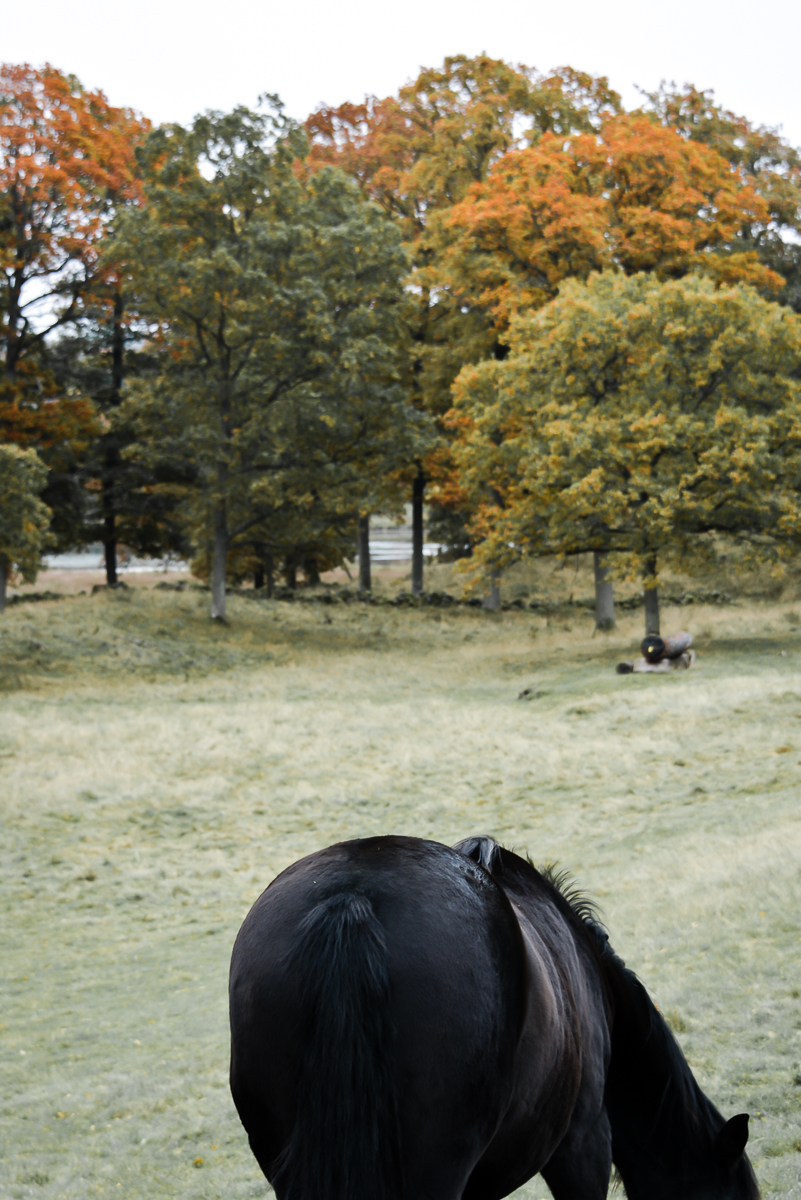
It´s so strange that autumn is so beautiful yet everything is dying (Shakespeare)


After a couple of hours in the woods, I rarely come home empty-handed. There is usually something tucked away in my backpack — a handful of mushrooms, some berries, or simply a collection of beautiful autumn leaves in all shapes and colours.
Nature is so generous at this time of year, and I love that so many of its treasures are completely free.
I often bring leaves home to dry and press between the pages of old books. Later, I use them to decorate the table, hang them in the kitchen window or make little autumn collages and invitations.
Some even find their way onto our Christmas tree.
There is something rather lovely about bringing a little piece of the forest indoors and enjoying it long after the season has passed.

And after a long walk in the crisp autumn air, there is nothing quite like coming home to a warm kitchen and something comforting to eat.
Autumn brings so many wonderful ingredients into the kitchen, and pumpkin is one of my favourites. I love making a big pot of creamy pumpkin soup, filling the house with the lovely aromas of cinnamon and nutmeg.
Simple, warming and just perfect for this time of year.


Creamy Pumpkin & Carrot Soup
A warming, velvety autumn soup with sweet pumpkin, carrots and a gentle hint of cinnamon and nutmeg. Perfect after a long walk in the woods.
Serves 4
Ingredients
700 g pumpkin, peeled and diced
2 medium carrots, peeled and chopped
½ onion, roughly chopped
2 tbsp olive oil
750 ml chicken or vegetable stock, plus extra if needed
½ tsp ground cinnamon
½ tsp ground nutmeg
Salt and freshly ground black pepper
A little milk or cream, if needed
To serve
Crème fraîche
A drizzle of good olive oil
Freshly ground black pepper
Crusty bread
Method
1. Prepare the vegetables
Heat the olive oil in a large saucepan over medium heat.
Add the chopped onion and cook gently for about 5 minutes, until soft and translucent.
Add the pumpkin and carrots, stir well, cover with a lid and cook gently for another 10 minutes, stirring occasionally.
2. Simmer the soup
Pour in the stock and bring to a gentle boil.
Reduce the heat and simmer for approximately 20–25 minutes, or until the pumpkin and carrots are completely tender.
Add the cinnamon and nutmeg.
3. Blend until creamy
Using a hand blender, blend the soup until completely smooth and velvety.
If the soup is too thick, add a little extra stock, water or milk until you reach your preferred consistency.
Season with salt and freshly ground black pepper.
4. Serve
Ladle the hot soup into bowls and finish with a spoonful of crème fraîche, a drizzle of olive oil and a little freshly ground black pepper.
Serve with good crusty bread.
A little note from my kitchen
I love preparing this soup before heading out for a long autumn walk. It tastes just as lovely the next day, and there's something wonderful about coming home to a pot of homemade soup


Autumn has so much more to offer than chanterelles and pumpkins. It's also the season for beautiful apples, juicy pears and sweet blackberries.
There is something incredibly satisfying about picking fruit and berries from your own garden and bringing them straight into the kitchen.
I never had blackberries growing in my garden back in Norway, but here on our farm in Sweden, they grow in abundance. Every autumn, I look forward to gathering them, often coming inside with stained fingers and far more berries than I had planned.
One of my favourite ways to enjoy them is in a rustic pear and blackberry galette. Nothing too complicated, just buttery pastry, ripe pears and a handful of freshly picked berries.
My version is inspired by a recipe from my friend Louise, whose beautiful blog, Cygnet Kitchen, is filled with wonderful photography and delicious food.
And with that, I wish you a lovely autumn, wherever you may be. Stay warm, light a few candles and enjoy the little pleasures this season brings.
Thank you for stopping by.
Pear & Blackberry Galette
A rustic autumn galette filled with juicy pears, sweet blackberries and a buttery, flaky pastry. Delicious served warm with a little cream or vanilla ice cream.
Makes one galette, approximately 23–28 cm
Ingredients
For the pastry
This recipe makes enough pastry for two galettes. I usually freeze half for another day.
500 g plain flour, plus extra for dusting
½ tsp fine sea salt
1 tsp caster sugar
375 g cold unsalted butter, diced
Up to 120 ml ice-cold water
For the filling
500–600 g ripe but firm pears
150 g fresh blackberries
75–100 g golden caster sugar, depending on the sweetness of the fruit
Juice of ½ lemon
65 g hazelnuts or cobnuts, finely chopped
To finish
1 beaten egg, for brushing
2–3 tbsp Demerara sugar
A little warmed crab apple jelly for glazing (optional)
Method
1. Make the pastry
Combine the flour, salt and caster sugar in a large bowl.
Add approximately one-quarter of the cold butter and rub it into the flour with your fingertips until the mixture resembles coarse sand.
Add the remaining butter and gently rub it in, leaving small, pea-sized pieces throughout the dough. These little pieces of butter will give the pastry its lovely flaky texture.
Gradually add the ice-cold water, a little at a time, mixing gently until the dough just comes together. You may not need all the water.
Divide the dough into two equal portions and shape each into a disc. Wrap individually and refrigerate one disc for at least an hour. Freeze the other for another day.
2. Prepare the filling
Preheat the oven to 200°C (180°C fan).
Peel, quarter and core the pears, then cut them into thin slices.
Place the pears in a bowl with the sugar and lemon juice. Toss gently to coat.
If the pears are particularly juicy, allow them to stand for a few minutes and drain off any excess liquid.
3. Assemble the galette
Roll out the chilled pastry on a lightly floured surface into a circle approximately 28–30 cm in diameter.
Transfer to a baking tray lined with baking parchment.
Scatter the finely chopped hazelnuts over the pastry, leaving a border of approximately 5 cm around the edge. The nuts will help absorb some of the fruit juices.
Arrange the pear slices over the nuts and scatter the blackberries evenly between and over the pears.
Gently fold the pastry edges up and over the fruit, pleating as you go. Don't worry if it looks a little rustic — that's part of its charm.
Brush the pastry edges with beaten egg and sprinkle with Demerara sugar.
4. Bake
Bake for approximately 40–50 minutes, until the pastry is golden brown and the pears are tender.
If the pastry browns too quickly, loosely cover the edges with foil towards the end of baking.
Remove from the oven and, if desired, gently brush the warm fruit with a little warmed crab apple jelly for a beautiful glossy finish.
Allow to cool slightly before serving.
To serve
Serve warm with softly whipped cream, crème fraîche or a scoop of good vanilla ice cream.
Inspired by a recipe from my friend Louise at Cygnet Kitchen.